Make the vehicle visible and keep people clear of traffic
Dubai’s multi-lane arterials leave little margin for error when a car suddenly loses power. Your first job is not diagnosis. It is reducing the chance that another driver hits a stationary vehicle or a person standing beside it. If the engine is still running and steering remains usable, ease toward the hard shoulder, a service lane, or the nearest safe lay-by. On Sheikh Zayed Road and other high-speed corridors, work with whatever gap exists rather than forcing a perfect manoeuvre across several lanes.
Once you are as far from live traffic as conditions allow, switch on hazard lights immediately. At night or in poor visibility, hazards are often the only early warning approaching drivers receive. If you carry a reflective triangle and can place it without walking into live lanes, set it well behind the car. Never cross active lanes to retrieve items from the median.
- Keep occupants inside with seatbelts on until it is clearly safer to exit away from traffic.
- Exit on the side farthest from moving vehicles whenever possible.
- Do not stand between your car and oncoming traffic to inspect the fault.
Decide carefully whether anyone should leave the car
In dense Dubai traffic, leaving the cabin can be more dangerous than remaining inside with hazards on. If you are stopped in a live lane with no shoulder, staying belted and visible while you call for help is often safer. If you have reached a hard shoulder, service road, or car park entrance, exit on the protected side and move behind a barrier when possible.
UAE summers add heat stress. A broken-down car in July or August becomes uncomfortable quickly. If you wait outside, seek shade rather than standing in the open sun beside the bumper. Carry water on longer routes between emirates, and move anyone who feels unwell to a cooler, safer place.
Describe the fault clearly so the right help is sent
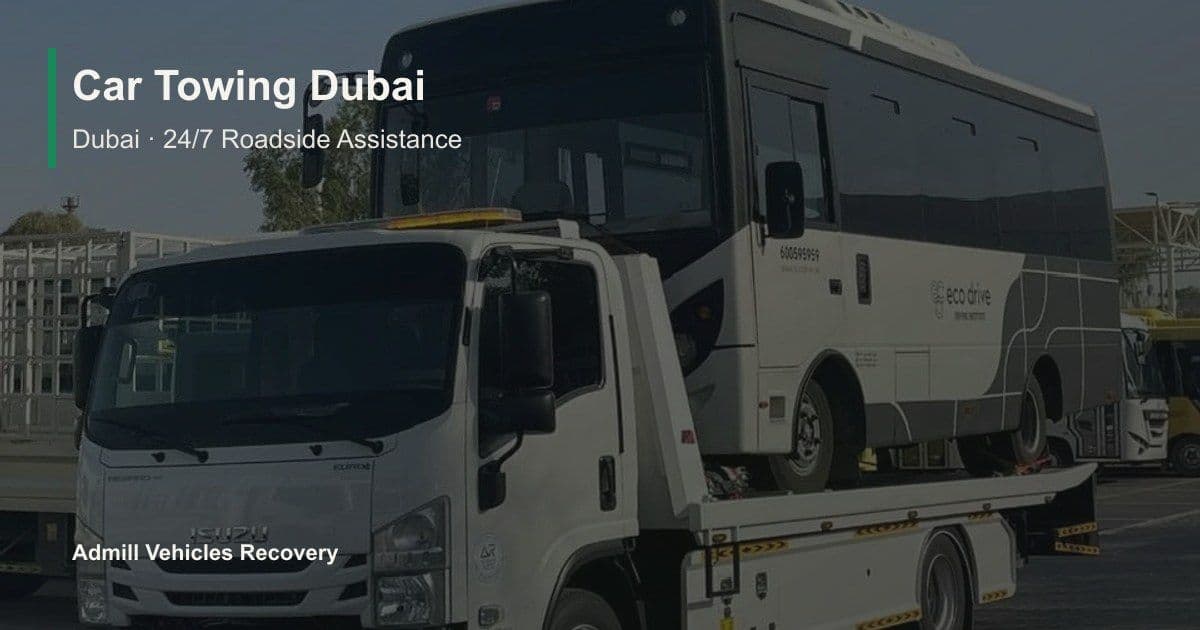
Roadside teams in Dubai handle different jobs with different equipment. A flat tyre on a quiet street may only need tyre replacement support. A dead battery in a basement may need a jump start or battery replacement. A car that will not select gear, has seized brakes, or sits after an impact often needs towing rather than a quick roadside fix. When you call Admill Vehicles Recovery or another provider, state whether the car rolls, whether wheels turn freely, and whether it is in a tight parkade, on a slope, or on a highway shoulder.
Share the vehicle type honestly. Low-profile sports cars, luxury models, and electric vehicles may need a flatbed rather than a simple wheel-lift approach. Basement ramps in Dubai towers often have height limits that affect which truck can enter. Accurate details prevent a second wait after the wrong unit arrives.
- Location: area name, nearest exit, building, or petrol station.
- Symptoms: no start, flat tyre, overheating, strange noise, or loss of power while driving.
- Access: street level, basement, sand verge, or multi-lane highway.
- Passengers: number of people waiting and whether anyone needs medical attention.
Choose roadside assistance or full recovery
Roadside assistance aims to get you moving again at the scene: jump starts, tyre changes, and similar fixes. Recovery and towing move the vehicle to a workshop, home, or safer holding location when it cannot be driven. Many Dubai breakdowns sit between both options. A battery that accepts a jump may still need replacement the same day if heat has weakened it. A tyre change gets you off the hard shoulder, but a damaged rim may still require a workshop visit.
If the car overheated on a summer commute, resist the urge to keep restarting and driving the moment the temperature needle drops. Allow cooling time as your mechanic advises, check for obvious coolant loss only when the engine is cool enough to approach safely, and arrange towing if the fault returns. Continuing to drive an overheating vehicle can turn a roadside delay into engine damage.
What to do once help arrives
When the recovery crew arrives, stay clear of winch lines, ramps, and traffic. Confirm the destination workshop before loading begins. Remove valuables, toll tags, and documents you need for the garage, and agree how keys will be handed over if you leave separately.
After a highway breakdown, review what failed. UAE heat stresses batteries and tyres, and long idling stresses cooling systems. A short maintenance check after recovery is wiser than a repeat stop on the same corridor.
Practical habits that reduce Dubai breakdown risk
Prevention will not eliminate every fault, but it reduces dangerous stops in traffic. Keep tyre pressures suited to load and heat, replace worn tyres before cords show, and confirm your hazards work. Keep a charged phone and water in the cabin. If the car has sat unused in summer heat, expect a weaker battery before a critical early trip.
Daily Sheikh Zayed Road commuters should treat unusual smells, dashboard warnings, and repeated hard starts as early signals. Addressing them in a workshop is safer than discovering them between exits at peak hour.
Step-by-step checklist
- Move out of live traffic when safe. If steering and power allow, ease toward the hard shoulder, service lane, or nearest safe lay-by instead of stopping in a live lane.
- Switch on hazard lights. Turn on hazards immediately so approaching drivers can see the stationary vehicle, especially on high-speed Dubai corridors.
- Keep people clear of the carriageway. Stay belted inside if you are exposed to traffic; exit only when there is a protected side and move behind a barrier when possible.
- Call for help with a clear location. Share the road name, direction of travel, nearest exit or landmark, and whether anyone is injured or the vehicle is blocking traffic.
- Describe the fault and access conditions. Explain symptoms, whether the car rolls, and whether you are on a highway, street, sand verge, or basement ramp so the right unit is sent.
- Choose roadside repair or towing. Request jump-start or tyre help if the car can be fixed on scene; arrange recovery if it cannot be driven safely.
- Stay clear while loading and confirm the destination. Keep clear of equipment, remove valuables, and confirm the workshop or drop-off point before the vehicle is moved.
Related services
Related guides
Sources and review notes
This guide is informational and is not legal, insurance, or mechanical advice. Follow instructions from Dubai Police, your insurer, or the relevant authority when they apply.
- RTA Safety Tips — Roads and Transport Authority (checked 2026-07-28)