Priorities when a vehicle stops on a highway
A sudden stoppage on a fast road is stressful. The order still matters: protect people first, make the vehicle more visible second, then arrange recovery. Standing in a live lane to inspect a tyre is not a safety plan.
Daylight, night, rain, fog, and dust each change how early other drivers see you. RTA guidance on unfavourable weather stresses visibility, spacing, and caution—principles that also apply when you are the stopped vehicle.
This article uses conditional language on purpose. Exact duties can depend on the situation. Treat the steps below as practical habits informed by RTA safety tips, not as a substitute for official instructions at the scene.
Be seen: lights and signalling
RTA safety tips note that hazard lights should be reserved for emergencies. Using them casually in rain can remove their meaning when a real emergency occurs. If your vehicle is stopped and creating risk, hazard lights help other drivers notice you—especially in poor visibility.
In fog and dust, RTA messaging highlights working lights, fog lights where appropriate, and avoiding high beams that reflect and reduce visibility. If you are stopped, help others see you early without blinding them.
A warning triangle can add advance notice when local practice and conditions allow safe placement. Only leave the vehicle to place equipment when doing so does not put you in the path of traffic.
Where to place the car and the people
If the car can still roll under control, moving fully out of live lanes—onto a hard shoulder or safer refuge where one exists—is often better than stopping on lane markings. RTA rain guidance warns against stopping on the road or near markings in ways that invite impacts from behind.
Passengers are usually safer away from the traffic side when a protected space exists. Do not stand downhill of the car on a slope. Keep children off the carriageway. If no refuge exists, remaining inside with seatbelts may be safer—that judgment depends on speed, barriers, and visibility.
Never walk along a high-speed lane to flag down help. Use your phone from a safer position and share a precise pin with emergency services or your recovery provider.
Weather factors that raise roadside risk
During rain, RTA tips encourage greater following distance, working lights, and caution because wet roads reduce braking efficiency. For a stopped vehicle, other drivers may need more distance to react—so visibility matters even more. Avoid flooded stretches; RTA notes estimating water depth is difficult and moving water can sweep vehicles away.
During dust, RTA guidance includes working lights and reduced speed when changing lanes. Expect others to see you later than usual. During fog, RTA advice includes fog lights rather than high beams, and—if you must stop—parking aside with hazard lights on.
These notes do not replace live official alerts. A breakdown in clear weather and one in fog are not the same risk profile.
Calling for help without losing focus on safety
Once people are as safe as the scene allows, call the appropriate emergency number if anyone is injured or the carriageway is blocked in a way that needs police or civil defence. For an immobilised car that needs removal, contact a recovery provider with your pin, direction of travel if known, and landmark details such as an exit number or interchange name.
Say whether the stoppage followed a collision. Accident scenes may need reporting steps before the car is moved; our separate accident guide covers that path. For a simple breakdown, our breakdown checklist pairs with these safety habits.
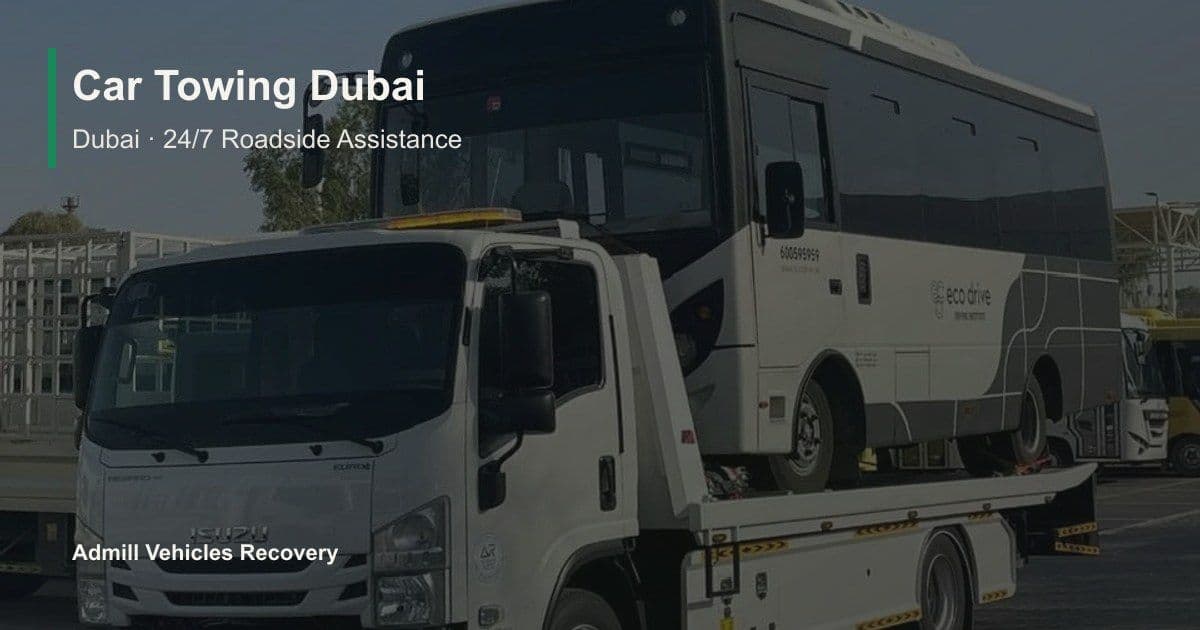
Admill Vehicles Recovery can respond for car towing or accident recovery when you can share a clear location. Stay on the line only as long as it is safe; returning attention to approaching traffic comes first.
Habits that increase harm
Do not open doors into live traffic. Do not attempt complex repairs in the lane. Do not assume other drivers will swerve in time—many are distracted or travelling faster than they realise, a point RTA also stresses in wet conditions.
Do not leave the scene in a way that creates a second hazard, such as walking across multiple lanes at night. Do not treat hazard lights as a substitute for moving out of danger when movement is still possible and safe.
After deep water or a wet tunnel, RTA tips suggest testing brakes at low speed when safe because water can reduce braking efficiency. If brakes feel wrong after such conditions, treat continued highway driving as risky and arrange recovery rather than “seeing if it improves” at speed.
Step-by-step checklist
- Make the stop visible. If you are in a true emergency stop, use hazard lights so other drivers can notice you earlier. In fog or dust, keep appropriate lights on and avoid high beams that reduce visibility.
- Move out of live lanes when you can. If the car can still be guided safely, aim for a hard shoulder or other refuge rather than stopping on lane markings. Do not create a new risk while moving.
- Protect people first. Keep passengers away from the traffic side when a safer waiting place exists. Avoid standing in live lanes or walking along the carriageway to seek help.
- Account for weather. Expect longer stopping distances for other drivers in rain, and lower visibility in fog or dust. Increase your own caution and signalling accordingly.
- Share a precise location and call for the right help. Send a live pin and landmarks to emergency services if needed, then to a recovery provider for towing or accident recovery. Stay aware of traffic while you communicate.
- Avoid roadside repairs in traffic. Do not attempt complex fixes beside high-speed lanes. If the vehicle cannot continue safely, wait for controlled recovery rather than forcing a return to traffic.
Related services
Related guides
Sources and review notes
This guide is informational and is not legal, insurance, or mechanical advice. Follow instructions from Dubai Police, your insurer, or the relevant authority when they apply.
- RTA Safety Tips — Roads and Transport Authority (Dubai) (checked 2026-07-28)