
How extreme heat changes everyday car behaviour
Metal, rubber, fluid, and battery chemistry all respond to temperature. In a UAE summer, a car parked in open sun can reach interior and under-bonnet conditions far above what the same vehicle experiences in mild climates. Rubber compounds soften. Tyre pressure rises as air inside the tyre warms. Battery performance becomes less forgiving of age and corrosion. Coolant systems work harder while ambient air offers less relief at traffic lights.
Drivers often notice the pattern after the car has sat for hours outside an office, mall, or beach parking lot. The first restart of the afternoon is weak. The steering wheel is painful to touch. Warning lights that stayed quiet in winter appear after a short hop through peak traffic. None of this requires invented percentages to understand: heat is a continuous stress test, and neglected maintenance fails earlier under that stress.
Batteries: the quiet cause of many midday no-starts
A battery that still starts the car on a cool March morning can struggle after baking on a July afternoon. Short trips between home, school, and supermarket may not give the charging system enough steady running time, especially with air conditioning, cooled seats, and infotainment drawing power. Corrosion on terminals, loose clamps, and aging plates compound the problem.
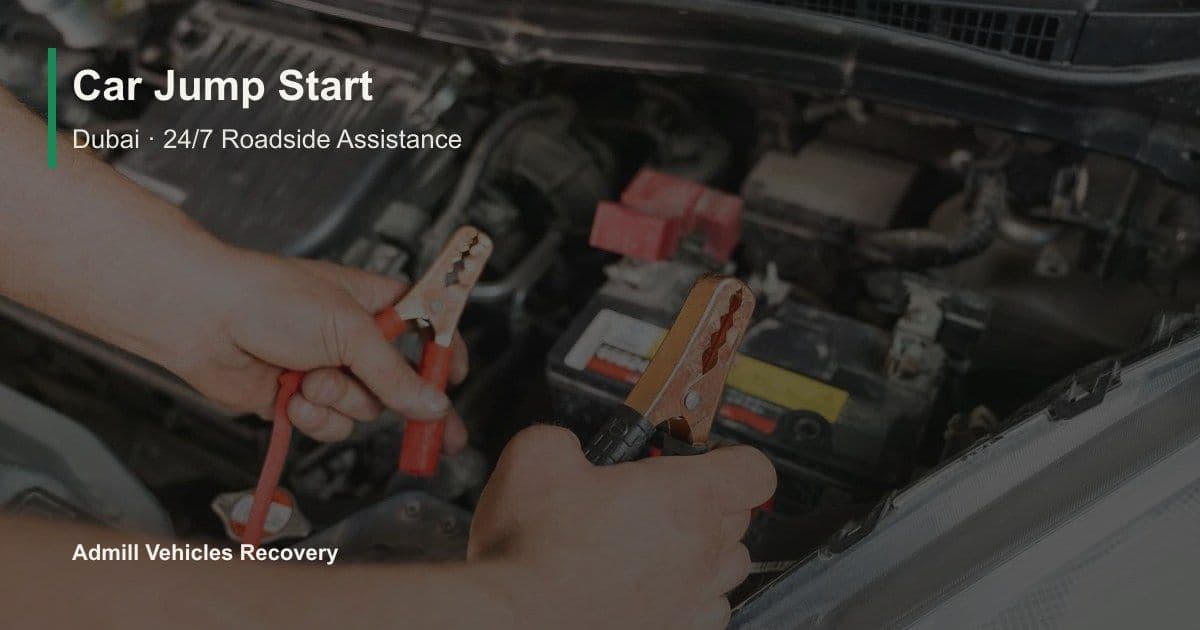
When the car clicks or cranks slowly, avoid repeated long cranking that heats the starter. Move to a safe place if you are on the road, switch off non-essential loads, and arrange a jump start or battery assessment. In many Dubai cases, a successful jump is only temporary relief; heat-damaged batteries often need replacement rather than another week of hopeful restarts.
- Park in shade when you can, especially for long workdays.
- Watch for slow cranking before the car fails completely.
- Limit unnecessary accessory loads during a weak-start situation.
- Ask for battery testing after repeated summer jump starts.
Tyres on hot asphalt and rough UAE road edges
Hot asphalt increases the demand on tyre sidewalls and tread. Underinflation creates excess flex and heat build-up. Overloading a family SUV for a weekend trip adds more stress. Potholes, raised manhole edges, and construction cut-outs appear across growing Dubai districts; a softened tyre hits them with less forgiveness. Kerbing a wheel in a tight parking basement can look minor until the sidewall fails days later on Emirates Road.
If you hear a sudden thump or the car pulls hard, do not sprint across lanes to “just check quickly” in live traffic. Get to a safe shoulder or exit, then inspect. A space-saver spare is a temporary tool, not a long-distance summer cruising tyre. Arrange proper flat-tyre replacement support if you cannot change the wheel safely where you stopped.
Cooling systems under stop-go summer traffic
Long idling in Dubai congestion forces the cooling system to reject heat while airflow through the radiator is limited. Low coolant, aging hoses, weak water pumps, dirty condensers packed with dust, and failing fans all become more obvious in August than in January. Dashboard temperature warnings deserve immediate respect. Continuing to drive “just to the next exit” can be reasonable only when that exit is truly close and the needle is not climbing hard; otherwise, stop safely and arrange help.
Never open a hot radiator cap. Steam burns are a classic summer roadside injury. If the car smells sweet from coolant or you see puddles under the engine bay after stopping, treat the vehicle as unfit to continue until checked. Towing to a workshop is often cheaper than turning a hose leak into head-gasket territory through stubborn driving.
Fuel, electrics, and air-conditioning load
Running the air conditioning is not optional for safety in peak heat, yet it does add load to the engine and electrical system. Alternators and belts that were marginal in winter may squeal or undercharge when everything runs at once. Aftermarket electronics, dash cams, and phone chargers add smaller drains that matter more when the battery is already weak.
Fuel-related stops still happen: empty tanks on unfamiliar routes between emirates, contaminated fuel after a bad fill, or vapour-lock style symptoms on older vehicles in extreme heat. Describe smells, warning lights, and recent fuel stops clearly when you call for help so the team knows whether jump-start, fuel support, or towing is the better first move.
Roadside priorities when the temperature is extreme
Heat changes the waiting experience. Water, shade, and limiting time on dark asphalt matter. Keep passengers out of live lanes. If you must wait outside, choose the protected side of the car or a barrier shadow. Watch children and older passengers for heat exhaustion signs. A broken-down car can become dangerous as a hot box; cracking windows for airflow helps only when the vehicle is safely positioned.
Admill Vehicles Recovery regularly supports summer call-outs for jump starts, battery replacement, flat-tyre replacement, and full towing when the car cannot continue. Tell the dispatcher if anyone is becoming unwell from heat so the priority stays on people as well as the vehicle.
A practical pre-summer preparation checklist
Before the hottest months, have the battery load-tested, inspect belts and hoses, confirm coolant condition, and check tyre age as well as tread depth. Rubber expires with time, not only kilometres. Replace wiper blades that have hardened. Confirm your hazards work. Keep water in the cabin. If the car sits for long stretches, consider a maintainer or periodic drives rather than a pure parking-lot life in open sun.
Prevention does not eliminate every summer breakdown on Dubai roads, but it reduces the chance of a dangerous stop in fast traffic when temperatures are already punishing. When a stop does happen, favour safe positioning and professional roadside help over improvised repairs in live lanes.
Related services
Related guides
Sources and review notes
This guide is informational and is not legal, insurance, or mechanical advice. Follow instructions from Dubai Police, your insurer, or the relevant authority when they apply.
- General automotive heat-stress guidance for hot climates — Automotive service best practice (checked 2026-07-28)