Two different jobs that are often confused
Drivers often use “tow,” “recovery,” and “roadside assistance” as if they mean the same thing. They do not. Roadside assistance aims to restore enough function for you to continue driving, or at least to move the car a short distance under its own power. Car recovery accepts that the vehicle will leave on another vehicle and focuses on safe loading and transport.
Mixing the terms wastes time. Calling for a tow when a jump-start would work can add delay and cost. Calling only for a jump when the engine will not run after several attempts can leave you still stranded. Naming the outcome you need—drive away versus transport—keeps dispatch aligned with reality.
Membership products, insurance add-ons, and workshop courtesy services may use their own labels. When you speak with Admill Vehicles Recovery or any provider, describe the car’s condition in plain language rather than relying on product names alone.
What roadside assistance typically covers
Common roadside jobs in Dubai include boosting a flat battery, replacing a failed battery on site, delivering fuel when the tank is empty, and helping with certain tyre situations when equipment and spare parts allow. The shared idea is simple: the technician works at your location and, if successful, you drive away.
Roadside help has limits. It cannot repair major mechanical failures beside the road. It should not be used to force a damaged car back into traffic when steering, brakes, or structure are compromised. Weather, traffic, and access also matter—some locations are safer for a short mobile visit than for prolonged roadside work.
- Jump-start when the battery is drained but the car is otherwise sound
- On-site battery replacement when cells will not hold a charge
- Fuel delivery when the tank is empty and the engine can restart
- Limited tyre help when a safe repair or change is practical on site
What car recovery typically covers
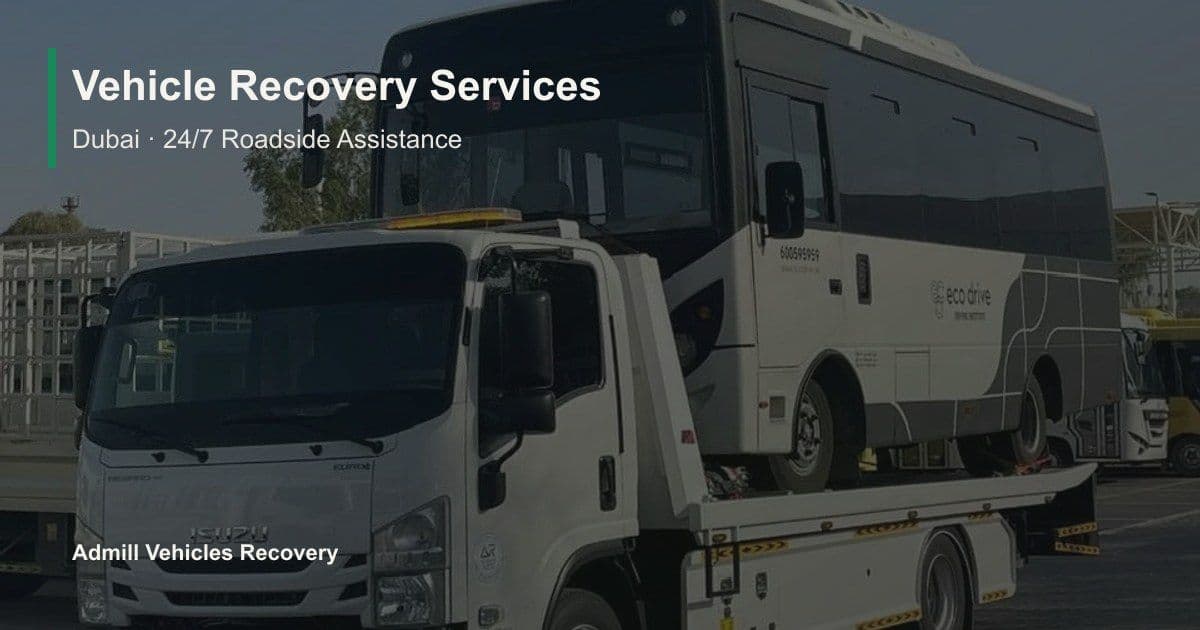
Recovery is transport. The car is loaded using a suitable method—often a flatbed or another controlled approach—and taken to a workshop, home, dealership, or storage point you confirm. It is the right path after collisions that immobilise the car, after mechanical failures that prevent driving, and when access constraints mean the vehicle must be extracted before it can travel.
Recovery also applies when driving would be unsafe even if the engine starts: severe tyre damage without a workable spare, fluid leaks that risk further harm, or warning lights that indicate a failure you should not ignore on a highway. The goal is controlled movement of the vehicle, not a quick restart.
A simple decision framework
Ask three questions. First: can the car be made roadworthy where it sits with tools and parts that a mobile unit typically carries? Second: if it starts, is it safe and legal enough to drive to a workshop? Third: is the car in a place where it cannot remain—blocking a ramp, a live lane, or a building exit?
If the answers point to a mobile fix and a safe drive-away, start with roadside assistance. If the car cannot be driven, should not be driven, or must leave immobile, request recovery. If you are unsure after describing symptoms, say so; a clear dispatcher will choose based on facts rather than upselling the heavier option by default.
Electric vehicles add a further nuance: some faults need specialist handling, and towing methods matter. When in doubt, say the car is electric early so the plan accounts for it.
When jobs start as roadside and become recovery
Escalation is normal. A jump-start that fails to keep the engine running may lead to battery replacement. A battery change that still will not crank may lead to a tow for deeper diagnosis. Fuel delivery that does not restore starting may uncover another fault. None of these sequences means the first attempt was wasted; each step ruled something out.
Tell the provider if you already tried boost cables, a previous jump, or a short drive that ended in another stoppage. That history changes the likely next step. Admill Vehicles Recovery can escalate from on-site help to car towing when the vehicle still will not run after a reasonable roadside attempt.
What to say when you call
Lead with location, then symptoms, then goal. Example: “I am in a basement in Business Bay, car will not crank after lights were left on, I need to get to a workshop if it will not start.” That single sentence already separates a possible jump-start from a likely tow.
Add vehicle type, whether it rolls, and any access limits. Mention if you have a preferred destination. Avoid insisting on a service name before the facts are clear; let the dispatcher map your description to jump-start, battery replacement, fuel delivery, or car towing.
If you are comparing providers, ask how they decide between roadside and recovery for your case. The quality of that answer often matters more than a polished slogan.