
What heat does to battery chemistry
A conventional 12-volt starter battery stores energy through chemical reactions inside its cells. High temperatures speed those reactions and also speed the unwanted side reactions that age the battery. Water loss in some designs, plate corrosion, and reduced ability to accept a full charge become more likely when the battery lives in a hot engine bay or a parked cabin environment that soaks up sun all day.
Cold climates are famous for hard starts; hot climates are hard on longevity. In the UAE, the stressful season is long. A battery does not only “fail on the hottest day.” It often declines through late spring and early summer until one afternoon restart finally refuses. That is why workshops talk about testing rather than guessing from the calendar alone.
Why you should ignore one-size-fits-all lifespan claims
Online articles sometimes quote tidy lifespans as if every battery expires on a schedule. Real outcomes vary with battery specification, fitment quality, charging-system health, trip length, parking habits, and whether the car sits unused. A vehicle that does long weekly highway runs may keep a battery healthier than one that only makes five-minute school runs with the air conditioning on full.
Treat manufacturer labels and warranty periods as commercial terms, not predictions of the exact week your car will fail on Sheikh Zayed Road. The useful question is not “how many years should it last in Dubai?” It is “is this battery still able to deliver reliable starts after heat soak and overnight rest?” Testing answers that better than folklore.
Warning signs that appear before a total no-start
Slow cranking is the classic signal, especially after the car has been parked in open sun. Clicking without cranking, flickering cabin lights at start, needing multiple attempts, or needing a jump after the car sat for only a day or two are also common. Some cars show battery or charging warnings; others simply behave oddly with electronics resetting.
Do not ignore a battery that needs frequent jump starts. Each emergency start can mask decline until you are stuck in a basement with poor phone signal or on a dark service road. Schedule testing after the second unexpected jump in a short period, or earlier if cranking has clearly slowed.
- Slower than usual engine cranking, especially when hot.
- Electrical oddities at start-up or after short stops.
- Repeated need for jump starts within days or weeks.
- Corrosion on terminals or a battery case that looks swollen or leaking.
Short trips, parasitic drain, and cabin electrics
Dubai driving often mixes short hops with heavy accessory use. The alternator needs running time to replenish what the starter and electronics consumed. If you start the car, blast the air conditioning, drive ten minutes, and shut down, the battery may slowly lose ground over weeks—especially if it is already heat-aged. Dash cams wired to constant power, aftermarket trackers, and appliances left plugged in can add drain while parked.
If a relatively new battery keeps dying, ask a workshop to check for parasitic drain and charging voltage rather than replacing parts blindly. A healthy battery paired with a weak alternator or a heavy drain will fail the same roadside story again.
Jump start versus battery replacement
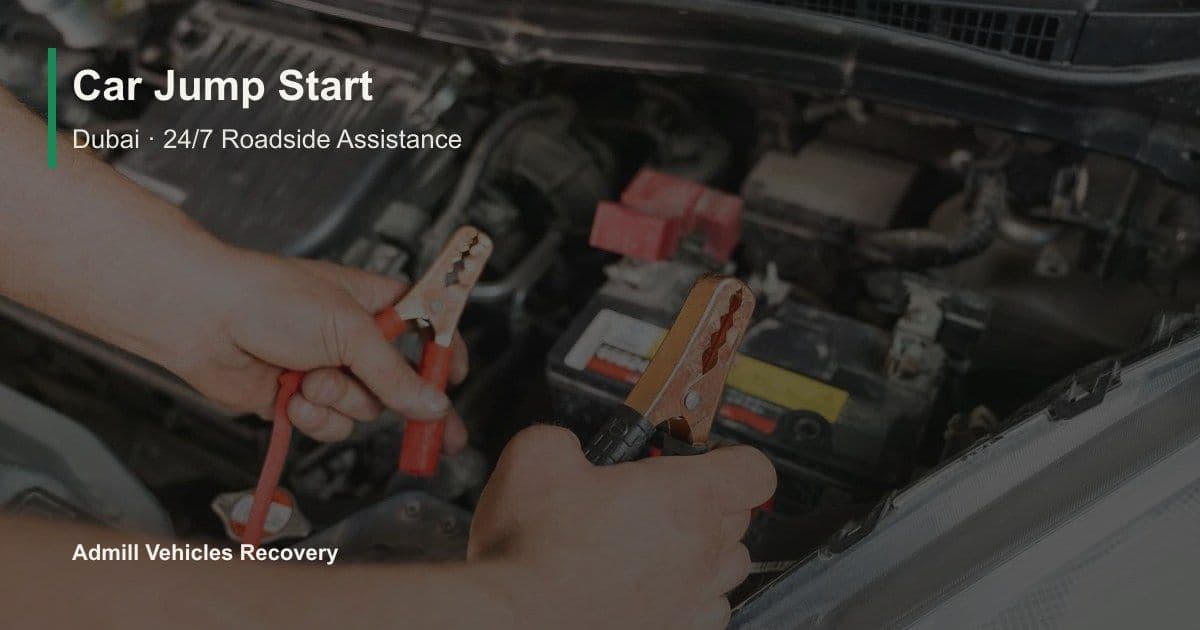
A jump start is a rescue, not a repair. It gets you moving so you can reach a safer place or a workshop. If the battery is simply flat from lights left on, a charge and healthy system may be enough. If heat has aged the battery, the car may start after a jump and then fail again tomorrow afternoon. Admill Vehicles Recovery offers jump-start assistance and can support battery replacement when the unit is clearly due for renewal.
When replacing, quality of fitment matters: correct specification, secure hold-down, clean terminals, and proper disposal of the old unit. Cheap mismatches that barely fit the tray create new vibration and connection problems in UAE heat and rough road edges.
A note on 12-volt batteries in electric cars
Many electric cars still rely on a small 12-volt battery for computers, contactors, and accessories. When that auxiliary battery is weak, the EV may refuse to wake or select Ready mode even if the high-voltage pack still has energy. Owners sometimes misread this as a main-battery emergency. Describe the exact warnings to your recovery or service team so they do not assume the wrong system has failed.
High-voltage packs are not roadside DIY objects. Leave pack diagnosis to qualified technicians. For a silent EV that will not awake after sitting in summer heat, professional assessment beats repeated guessing with ordinary jump leads.
Practical care habits for UAE drivers
Park in shade or covered parking when you can. Keep terminals clean. Avoid leaving the car unused for long stretches without a plan to maintain charge. Before peak summer, ask for a load test if the battery is aging or has already needed a jump. On road trips between emirates, treat a weak battery as a travel risk equal to a worn tyre.
If you do get stranded, prioritise safe positioning, hazard lights, and clear location details when you call for help. Heat makes waiting harder, so water and shade for passengers matter while jump-start or replacement support is on the way.
Related services
Related guides
Sources and review notes
This guide is informational and is not legal, insurance, or mechanical advice. Follow instructions from Dubai Police, your insurer, or the relevant authority when they apply.
- Automotive battery care in hot climates — Automotive service best practice (checked 2026-07-28)