Important disclaimer before you read further
Accident procedures in Dubai can depend on injury status, location, vehicle damage, and current Dubai Police guidance. Reporting tools and insurer requirements also change over time. Treat this article as general information for drivers who want a clearer sense of common priorities. It is not a substitute for official instructions, legal advice, or your insurance policy wording. If police or your insurer give directions that differ from anything here, follow those directions.
Protect people before worrying about the cars
The first question after any collision is whether anyone is hurt. If there are serious injuries, smoke, fire risk, or a scene that remains exposed to fast traffic, call emergency services and do not move injured people unless there is an immediate life-threatening hazard such as fire. Keep bystanders from gathering in live lanes. Switch on hazard lights if the vehicles are still occupying roadway space and it is safe to do so.
If everyone can move safely, get clear of live traffic when conditions allow. Dubai’s arterial roads leave little room for people standing between bumpers taking photos. A secondary collision is a real risk on Sheikh Zayed Road, Al Khail Road, and busy interchanges. Move to a protected area only when doing so does not worsen injuries or violate instructions from attending officers.
- Check yourself and passengers for injury before inspecting vehicle damage.
- Call emergency services for serious injuries or hazardous scenes.
- Use hazards and keep people out of live lanes.
- Do not argue in the carriageway; move discussions to a safer place when possible.
Reporting: follow Dubai Police channels for your situation
Dubai has promoted digital reporting options for certain accident categories, alongside traditional emergency response for serious incidents. Drivers commonly hear about the Dubai Police app and related digital services for eligible cases, while 999 remains the emergency contact people are directed to use when the situation is serious. Because eligibility rules and app workflows can change, confirm the current process through official Dubai Police information rather than relying on memory or informal advice from bystanders.
Secondary reporting coverage in local media has described how digital reporting aims to reduce roadside waiting for some minor collisions. Those articles are useful context, not authoritative procedure manuals. If you are unsure whether your case qualifies for self-reporting, contact official channels and follow the answer you receive. Never leave a scene in a way that conflicts with police instructions.
Document the scene carefully without creating new danger
When it is safe, record clear photos of vehicle positions, damage, road layout, skid marks if visible, and nearby signals or signs. Capture number plates and the wider context, not only close-ups of a dent. Note the time, weather, and exact location using a nearby exit name, building, or junction. If there are independent witnesses who volunteer contact details, record them without blocking traffic to chat.
Avoid admitting fault in heated roadside conversation. Stick to factual exchanges needed for reporting and insurance. Your insurer will ask for documents and may request the official report reference. Keep copies of whatever report number or digital confirmation you receive.
Speak to your insurer before major repair decisions
Once people are safe and reporting is underway, contact your insurance provider using the number on your policy documents or insurer app. Ask what they need from the police process, whether the car should go to an approved workshop, and whether you should arrange recovery yourself or wait for their guidance. Policies differ for comprehensive and third-party cover, and rental or company cars may have separate fleet rules.
Do not assume every damaged car must be towed immediately to the nearest garage. Some vehicles remain driveable after a light clip; others look minor yet have fluid leaks, airbag deployment, or wheel alignment damage that makes driving unsafe. If you are unsure, treat the car as not driveable until a competent assessment says otherwise.
When accident recovery and towing become necessary
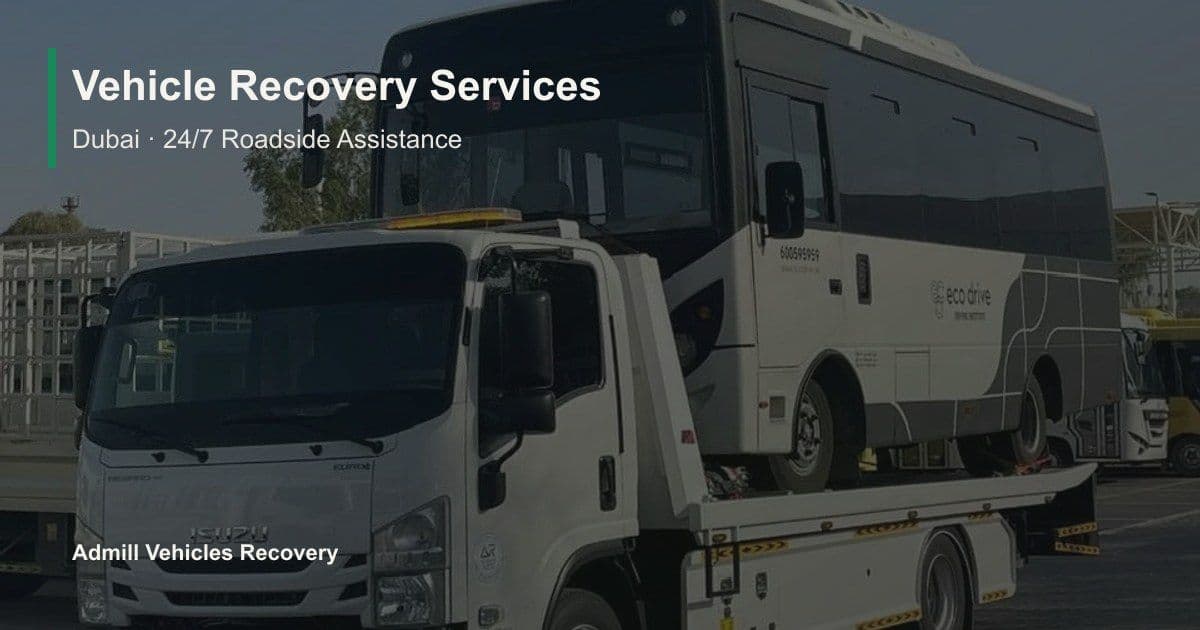
Recovery is often needed when airbags have deployed, wheels are damaged, fluids are leaking, the car will not start, or the vehicle is in a place where it cannot remain. Accident scenes may also require careful loading so that hanging bodywork, open panels, or compromised suspension are not dragged. Admill Vehicles Recovery handles accident recovery and car towing once the scene is released for vehicle removal, including cases where a flatbed is the safer way to move a damaged car.
Tell the dispatcher if the car is in a tunnel approach, on a sand verge, against a barrier, or inside a parking structure. Share whether doors open, whether the steering locks, and whether the vehicle is a low sports car or EV that needs a particular loading method. Clear information reduces further damage during winching and loading.
- Wait for police or official clearance when the scene is still under control.
- Confirm the drop-off workshop or holding location with your insurer when required.
- Remove personal belongings and documents before the car is loaded.
- Ask the crew how the vehicle will be secured if bodywork is hanging or a wheel is damaged.
After the vehicles leave the scene
Keep a simple folder of photos, report references, insurer messages, and recovery receipts. If you feel delayed pain, stiffness, or headache after an impact that seemed minor, seek medical advice rather than waiting days hoping it fades. For the car, ask the workshop to check for hidden damage beyond the visible panel, especially underbody trays, cooling components, and wheel geometry after kerb or barrier contact common on Dubai interchanges.
If you were not at fault according to the official outcome, your insurer will still guide claim steps. If responsibility is disputed, continue following official and insurer processes rather than informal roadside agreements. Recovery companies can move the car; they cannot settle liability questions.
A calmer mindset for Dubai traffic after an incident
Dubai traffic density rewards anticipation: larger following distances in fast lanes, patience at merge points, and extra caution near construction barriers and sudden lane drops. After you have been through an accident, it is normal to feel shaken on the same roads for a while. Give yourself time, avoid rushing back into peak-hour driving if you are unsettled, and focus on the same priorities next time anyone around you is involved: people first, official reporting second, vehicle movement third.
Related services
Related guides
Sources and review notes
This guide is informational and is not legal, insurance, or mechanical advice. Follow instructions from Dubai Police, your insurer, or the relevant authority when they apply.
- Dubai Police public services — reissuing accident reports and traffic services — Dubai Police (checked 2026-07-28)
- Digital Dubai — reporting minor accidents via DubaiNow — Digital Dubai (checked 2026-07-28)