Scope: Dubai, Abu Dhabi, and Sharjah
Drivers and businesses regularly need a car moved among Dubai, Abu Dhabi, and Sharjah—after a breakdown far from home, when a workshop is in another emirate, or when a vehicle must relocate without being driven. This article focuses only on those three emirates. Other UAE routes raise different logistics and are outside this guide.
Inter-emirate moves are not the same as a short local tow around one district. Distances are longer, pickup and drop-off windows need coordination, and the vehicle may sit on the transporter for an extended journey. Clear addresses on both ends matter as much as the recovery method.
Admill Vehicles Recovery frames these jobs as transport with an agreed origin and destination, not as an open-ended roadside call without a drop-off plan.
When inter-emirate transport is the right choice
Choose transport when the car cannot be driven safely between emirates, when you prefer not to put kilometres on a damaged or high-value vehicle, or when a workshop in another emirate is the agreed repair location. Immobilised cars after mechanical failure or collision are common candidates.
Transport can also suit cars that run but should not take a long highway trip—for example after a partial repair, with a temporary tyre, or when electronics and drivetrain warnings advise limited driving. The decision is about risk and destination, not only whether the engine starts.
- Immobile vehicles that must reach a workshop in another emirate
- High-value cars that owners prefer not to drive long distance
- Relocations between homes or storage points in the three emirates
- Post-repair or post-sale moves when the buyer or seller cannot drive the car
Planning pickup and drop-off
Start with precise locations. A pin for a Dubai marina tower and a pin for an Abu Dhabi workshop are more useful than city names alone. Note parking access, basement constraints, and whether a loading bay exists at either end. Sharjah industrial areas, Dubai service districts, and Abu Dhabi workshop zones each have different access patterns.
Confirm who will hand over keys and who will receive the car. If either site is unmanned, arrange a contact and timing window that works for both sides. Do not assume a transporter can wait indefinitely without prior agreement.
Share vehicle details early: make, size, whether it rolls and steers, ground clearance concerns, and whether it is electric. Those facts influence equipment choice for the road between emirates.
Loading methods for longer transfers
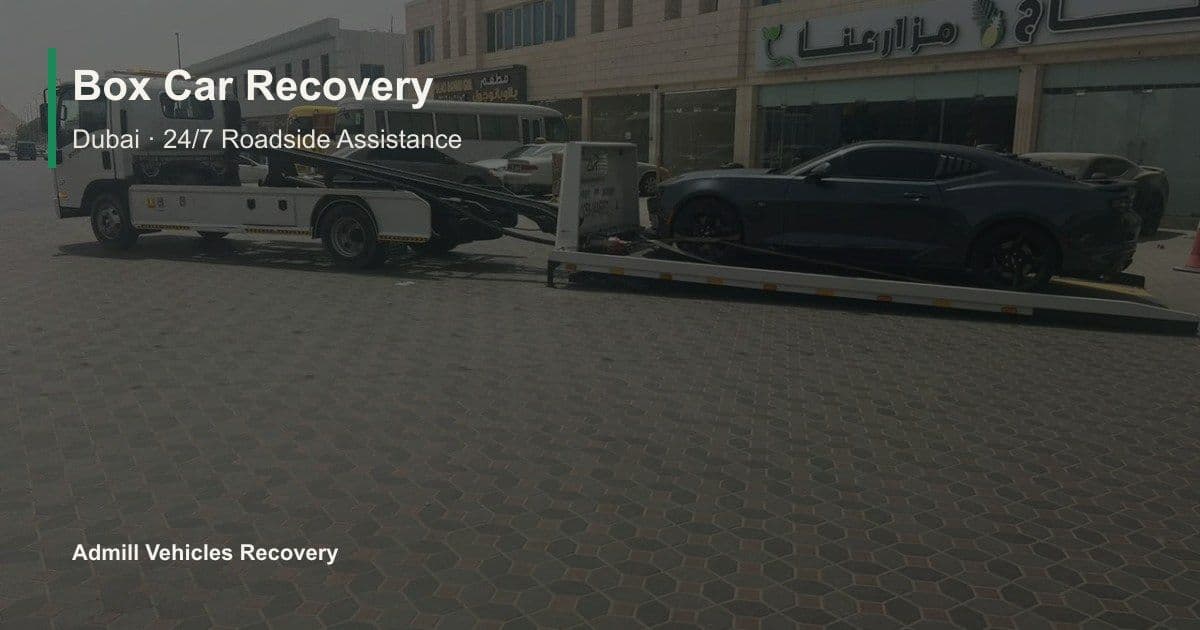
Open flatbed transport is common for many cars when weather and owner preference allow. Enclosed or box-style recovery may be preferred for higher-value vehicles or when extra protection during the journey is important. Wheel-lift approaches may suit some short recoveries but are not automatically the best choice for every longer transfer—ask which method is planned and why.
Electric vehicles often need particular care so drivetrain components are not stressed incorrectly. Say if the car is EV or hybrid before booking so the loading plan matches the vehicle. For a deeper method comparison, see our flatbed versus wheel-lift guide and our electric-car towing article.
Timing and pricing without fixed promises
Travel time between Dubai, Abu Dhabi, and Sharjah varies with traffic, pickup access, and whether both ends are ready. This guide does not publish fixed journey times or prices. Any serious quote should reflect your actual addresses, vehicle condition, and loading method rather than a one-line city pair rate copied from elsewhere.
Ask what could change the quote: difficult basement extraction at pickup, a second person required for handover, waiting beyond an agreed window, or a change of destination after loading. Aligning those points early prevents disputes later.
If you need both extraction from a tight site and an inter-emirate transfer, say so as one job. Treating them as separate surprises mid-route creates delay.
Documents, condition notes, and handover
Before loading, walk around the car with the crew when possible and note existing damage. Keep personal valuables with you. Ensure registration and any workshop paperwork travel with the vehicle or with the person receiving it, according to what the destination requires.
At drop-off, confirm the receiving party’s identity and the parking or workshop bay. If insurance is involved, ask whether they need photos before the car moves between emirates. Clear handover habits protect everyone involved.
How to request the move
Contact with both pins, vehicle type, whether it runs, and preferred pickup window. Mention if enclosed transport is important to you. Admill Vehicles Recovery can advise whether emirate-to-emirate transport, standard car towing, or box recovery best fits the vehicle once those details are known.
If the car is still on a roadside in one emirate and must reach a workshop in another, prioritise making the scene safe first, then book the transfer as a planned recovery rather than an improvised long tow without a confirmed drop-off.